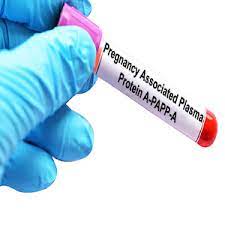
PAPP-A (Pregnancy Associated Plasma Protein-A)
4.6 (5 reviews)The PAPP-A test measures a placental protein in maternal blood to assess the risk of chromosomal abnormalities in early pregnancy.
Test Details
Also Known As
Pregnancy-Associated Plasma Protein-A Test, PAPP-A Blood Test, First Trimester Screening Marker, Prenatal Screening PAPP-A, Maternal Serum PAPP-A
Sample Type
Blood (Maternal Serum)
Gender
Female
Age Group
Pregnant women (First trimester)
Categories
Pathology
Test Code
Serum (2 ml) in 2 vials
PAPP-A (Pregnancy-Associated Plasma Protein-A) is a protein produced by the placenta during pregnancy. This test is mainly used as part of first-trimester prenatal screening, typically between 11 and 13+6 weeks of gestation, to assess the risk of chromosomal abnormalities such as Down syndrome (Trisomy 21), Trisomy 18, and Trisomy 13. Low levels of PAPP-A may also be associated with adverse pregnancy outcomes, including preeclampsia, fetal growth restriction, preterm birth, and placental insufficiency. The test is usually interpreted along with free β-hCG levels, ultrasound findings (nuchal translucency), maternal age, and gestational age.
Recommended Tests
₹69.00 ₹200.00
₹69.00 ₹200.00
₹399.00 ₹800.00
₹299.00 ₹400.00
₹299.00 ₹600.00
₹399.00 ₹800.00
₹79.00 ₹200.00
₹1350.00 ₹2500.00
₹699.00 ₹1500.00