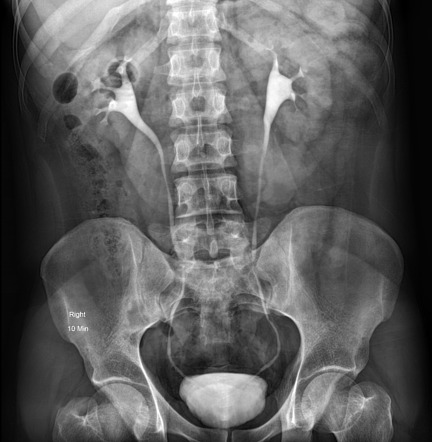
IVP (intravenous pyelogram)
4.6 (5 reviews)An imaging test that uses contrast dye and X-rays to examine the kidneys, ureters, and urinary bladder.
Test Details
Also Known As
Intravenous Pyelography, IVP Test, Kidney X-ray with Contrast
Sample Type
Blood, urine, contrast dye injection
Gender
Male, Female
Age Group
All Age
Categories
X-ray
Test Code
Special Test
IVP or Intravenous Pyelogram is an X-ray imaging test used to evaluate the kidneys, ureters, and urinary bladder. In this procedure, a contrast dye is injected into a vein, which travels through the bloodstream and is filtered by the kidneys. A series of X-ray images are then taken to observe the structure and function of the urinary system. IVP helps detect kidney stones, urinary tract blockages, tumors, congenital abnormalities, and infections. It is commonly advised for patients with blood in urine, recurrent urinary infections, or suspected kidney disorders. Proper hydration and preparation may be required before the test.
Recommended Tests
₹69.00 ₹200.00

₹69.00 ₹200.00
₹399.00 ₹800.00
₹299.00 ₹400.00
₹299.00 ₹600.00
₹399.00 ₹800.00
₹79.00 ₹200.00

₹1350.00 ₹2500.00

₹699.00 ₹1500.00